


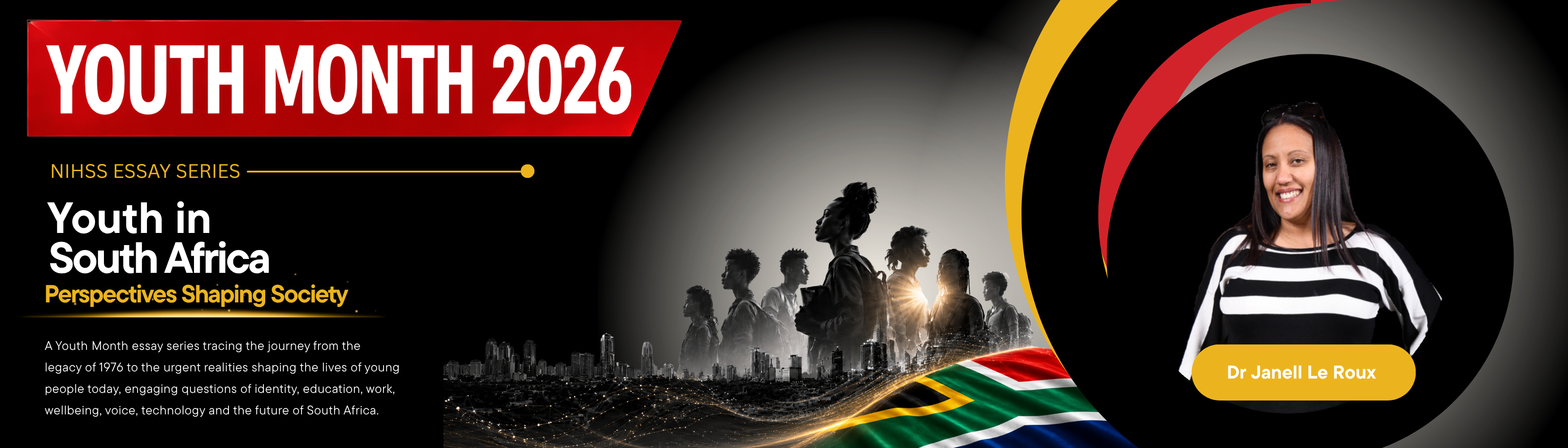
Learning to Belong: Youth, Identity and the Burden of Being “In-Between”
As a Coloured woman in South Africa, the question of belonging has never been abstract for me it has been lived, felt and negotiated in everyday spaces.
What does it mean to belong in a society where identity is still shaped through difference? For many young South Africans, belonging is not a given. It is encountered in fragments in classrooms, digital spaces and everyday interactions where who you are is interpreted and sometimes misrecognised. In these moments, identity becomes less about how we define ourselves and more about how others define us.
This is visible in the persistence of stereotypes in public discourse, where entire communities are reduced to simplified narratives. These are not isolated incidents, but part of deeper historical patterns that continue to shape how difference is understood.
My own awareness of this began long before I could name it. As a Coloured child entering a predominantly white school in the early years following apartheid, I experienced what it meant to be marked as different. I remember a school camp where we sat around a fire, baking bread on sticks. It should have been a moment of shared belonging. Instead, I felt something hit my head, then my face. A boy was throwing pieces of raw dough at me, and the laughter that followed made it clear: I had been singled out because I was different. In that moment, I knew I did not fully belong.
This awareness deepened during a school outing to a swimming pool, where I was once again the only Coloured girl. Before entering the water, my hair allowed me to blend in. Afterwards, it expanded into its natural form, drawing immediate attention and laughter. I became acutely aware of my difference. With tears in my eyes, I ran to the bathroom, trying to flatten my hair trying to belong.
These moments show something simple but powerful: we come to understand who we are partly through how others treat us. Identity is not only internal; it is lived through the body, in moments of visibility, discomfort and exclusion.
Yet these experiences also shaped my curiosity. They led me to ask: why is difference so easily turned into something negative? These questions later informed my research on African hair and identity, transforming personal experience into scholarly inquiry. But the struggle to belong does not end in childhood. It evolves.
As a Coloured woman in academia, I have spent years working in a space where I was the only person of my racial identity in my department and faculty. This was not always
overt exclusion, but a quieter marginality being present without being fully reflected. In such spaces, belonging is not just about access; it is about recognition.
This has shaped my work as an educator. I aim to create spaces where students feel seen and heard, and where their identities are recognised as valuable, not something to be corrected.
This is where the question of youth becomes urgent. Many young South Africans are navigating identity without the tools to critically engage difference, allowing stereotypes to persist. If we are serious about youth, we must move beyond superficial diversity and rethink how identity is taught and understood.
Belonging cannot remain conditional. To belong is to exist without constantly having to explain or justify your identity. It is to see yourself reflected, not as an exception, but as part of the fabric of the space you inhabit. For those of us who have lived in the “in-between”, the task is not only to critique exclusion, but to reimagine belonging itself as something expansive, relational and just. Only then can we build a South Africa where young people do not learn their difference through humiliation, but discover their identities through recognition, dignity and possibility.