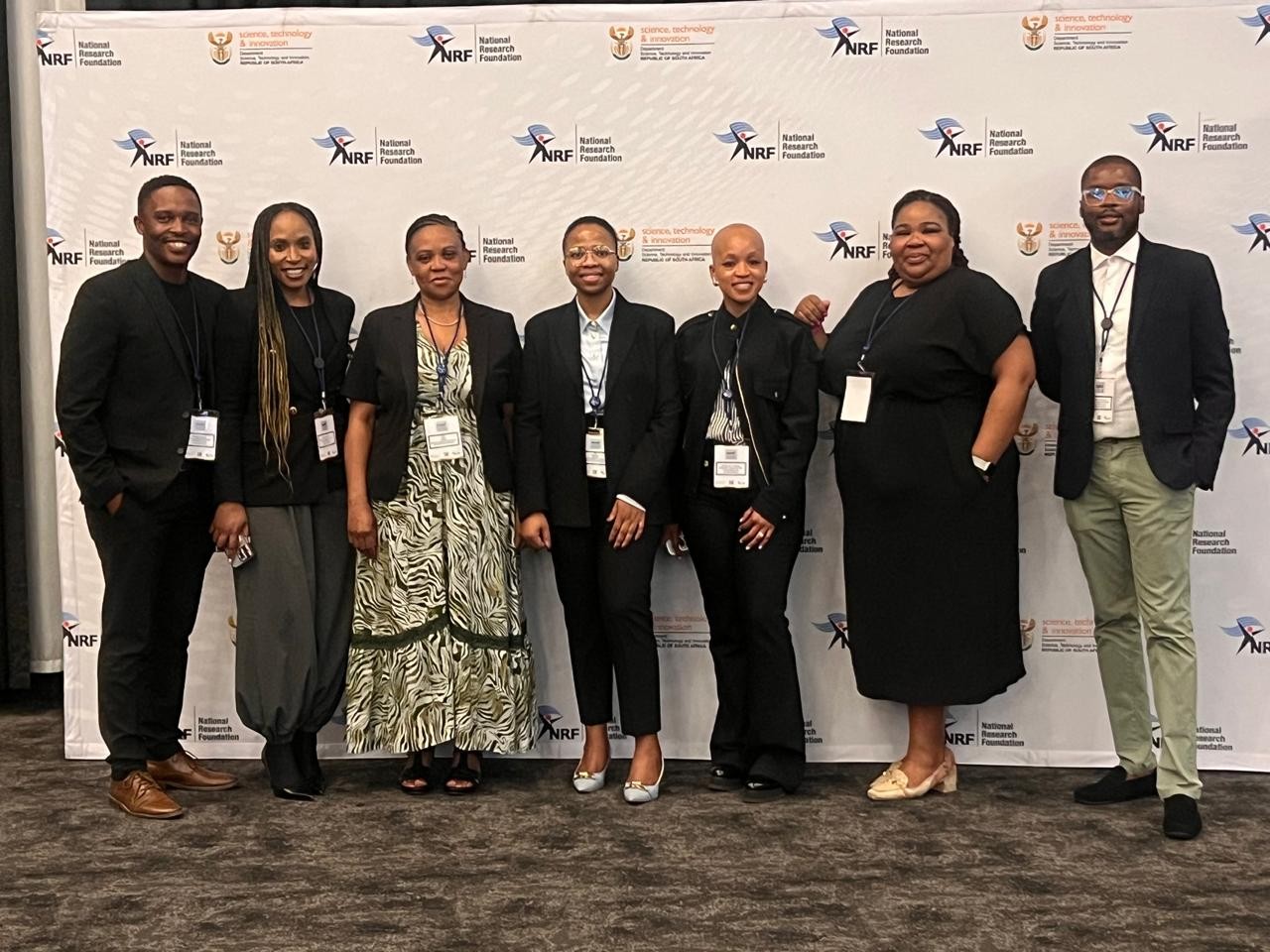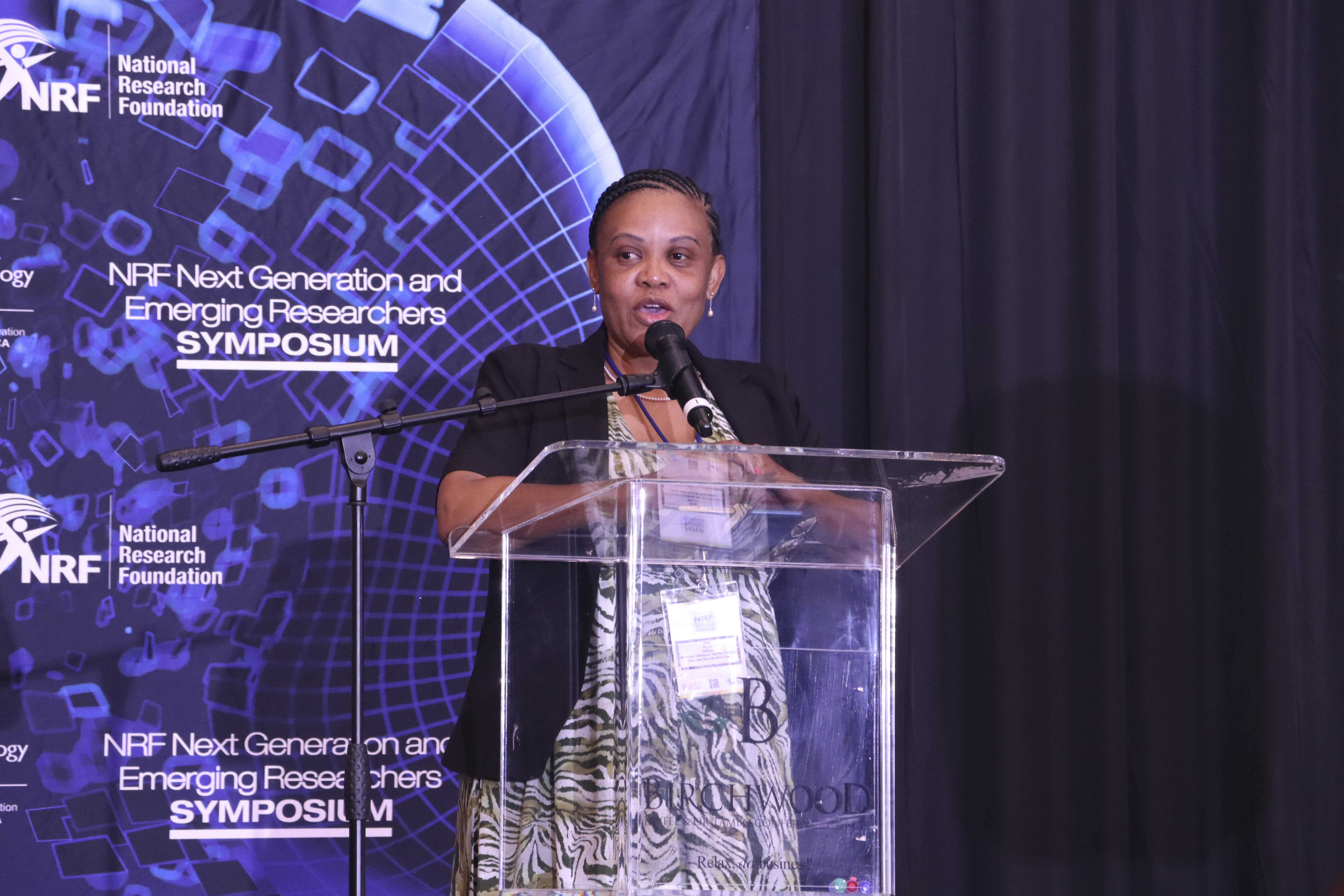
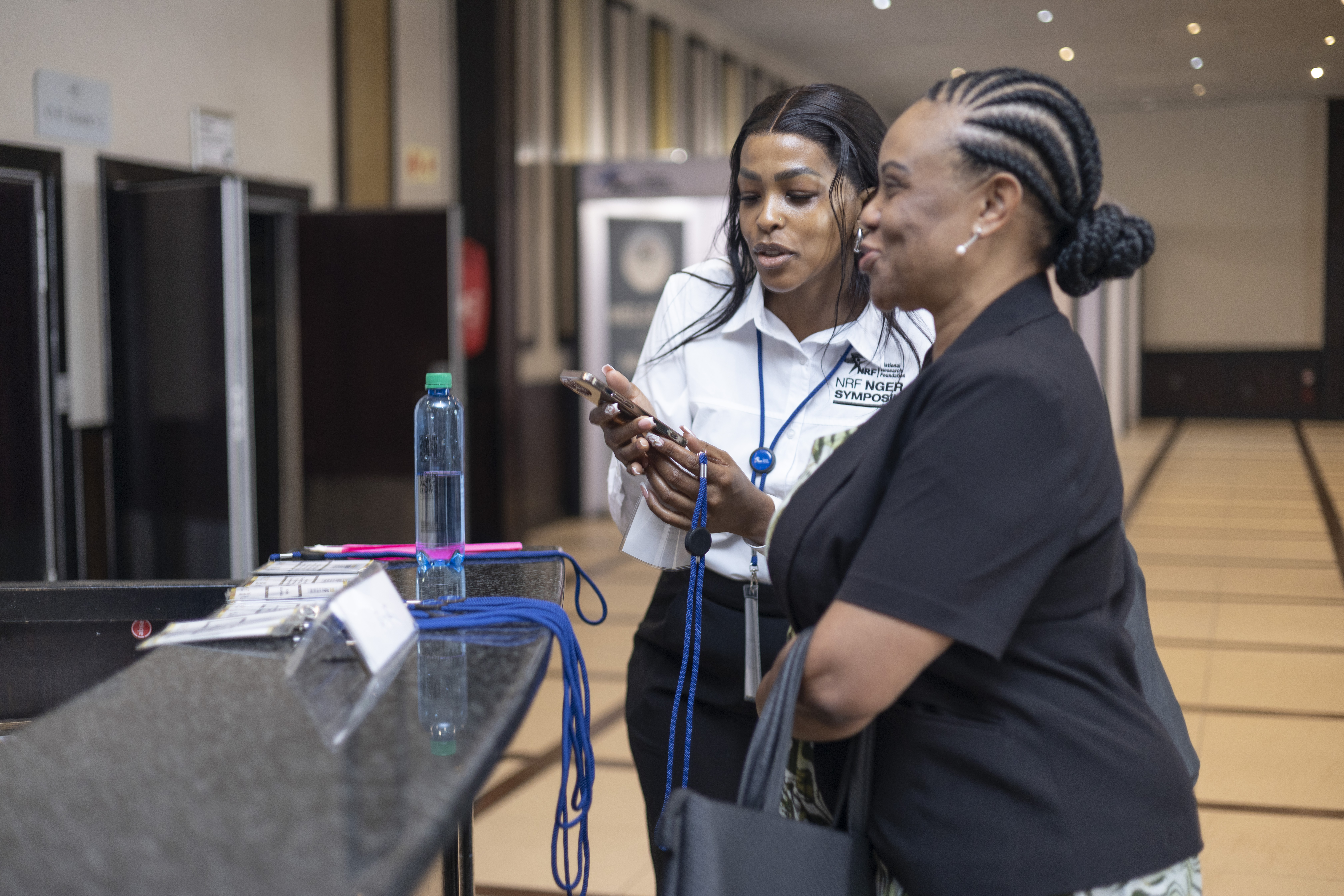
The National Institute for the Humanities and Social Sciences (NIHSS) continued to strengthen its engagement across South Africa’s broader research and innovation landscape as NIHSS CEO, Prof Pearl Sithole, participated in the 2026 NRF Next Generation and Emerging Researchers Symposium, held at Birchwood Hotel in Gauteng from 7-9 October 2026.
Convened by the National Research Foundation (NRF) under the broader theme of Research for a Better Society, the symposium brought together emerging researchers, senior academics, research institutions, government representatives and other stakeholders to engage some of the most pressing questions confronting the research ecosystem.
Prof Sithole was invited to facilitate the panel discussion on Decolonising Research, alongside Prof Mncedisi Maphalala of Mangosuthu University of Technology, Dr Dimpho Maponya of the University of Johannesburg, and independent researcher Dr Mpoe Keikelame.
The discussion placed questions of knowledge, power, relevance and ownership at the centre of the research process.
Introducing the conversation, Prof Sithole framed decoloniality through the lens of “science as justice”, arguing that questions of social justice cannot be separated from questions of knowledge justice. She reflected on Africa’s historical positioning largely as a recipient of knowledge and challenged researchers to move towards becoming producers of knowledge “for ourselves and the world.”
Her framing invited the panel and emerging researchers to interrogate not only what knowledge is produced, but also who determines what constitutes legitimate knowledge, whose realities inform research questions, and whose voices are recognised within established research systems.
Prof Sithole further challenged prevailing approaches to decoloniality, cautioning against simply seeking inclusion within systems that may themselves reproduce exclusion. She invited researchers to think more deeply about whether research frameworks genuinely advance social justice and whether the structures through which knowledge is produced create room for different voices, experiences and ways of knowing.
The panel reinforced that decolonising research should not be understood as the rejection of Western knowledge or scientific methods.
Rather, it requires creating meaningful space for African knowledge systems, African scholars, African realities and the communities within which research takes place. Questions such as whose theories are being used, who defines the research problem, whose knowledge counts, who participates, who benefits and who ultimately owns the knowledge produced were identified as central to a genuinely decolonial research process.
The discussion also challenged the misconception that decoloniality is concerned only with recovering or “excavating” the past. Instead, panellists argued that it should enable researchers to learn from history while developing new approaches capable of addressing present realities and anticipating future challenges.
One contribution emphasised that decolonisation is neither simply the substitution of Western knowledge with African knowledge nor a process of Africanisation. It requires researchers to question inherited epistemic structures and ask what can be done differently from the ways in which research has traditionally been conducted.
Practical examples from the panel demonstrated why context matters. Research conducted in communities must account for language, culture, lived experience and local knowledge holders from the beginning of the research process. One example highlighted the limitations of formally translated consent documents that did not reflect the language actually spoken by research participants, demonstrating how technically compliant research processes can still fail to meaningfully engage the people at the centre of the research.
The conversation therefore called for greater epistemic flexibility, producing researchers who are able to question established frameworks, critically interrogate methodologies and develop solutions that speak directly to African lived realities.
A significant thread throughout the discussion was that decolonising research should never be interpreted as lowering standards of academic excellence.
The panel stressed that decolonial research must move from rhetoric to practice while continuing to produce rigorous scholarship. The goal is research that is not only excellent, but also relevant, inclusive and impactful.
Prof Sithole echoed this point in closing, emphasising that the pursuit of decolonial approaches is not an argument against rigour, but rather a call for research frameworks that recognise the complexity of local contexts, philosophies and systems of knowledge production, while enabling researchers and communities to have meaningful agency and voice.
This connected strongly with the NRF symposium’s wider focus on ensuring that research does more than accumulate publications or academic recognition.
Opening discussions at the symposium emphasised that research must meaningfully engage society, address inequality, strengthen institutions, improve human wellbeing and contribute towards sustainable development. The NRF also highlighted the importance of building and transforming South Africa’s next generation research pipeline, noting its substantial investment in postgraduate students and researchers.
The broader programme addressed issues including decolonising research, artificial intelligence, geopolitical tensions affecting international research funding, research impact, commercialisation, transformation and researcher wellbeing, demonstrating the interconnected challenges facing the contemporary research system.
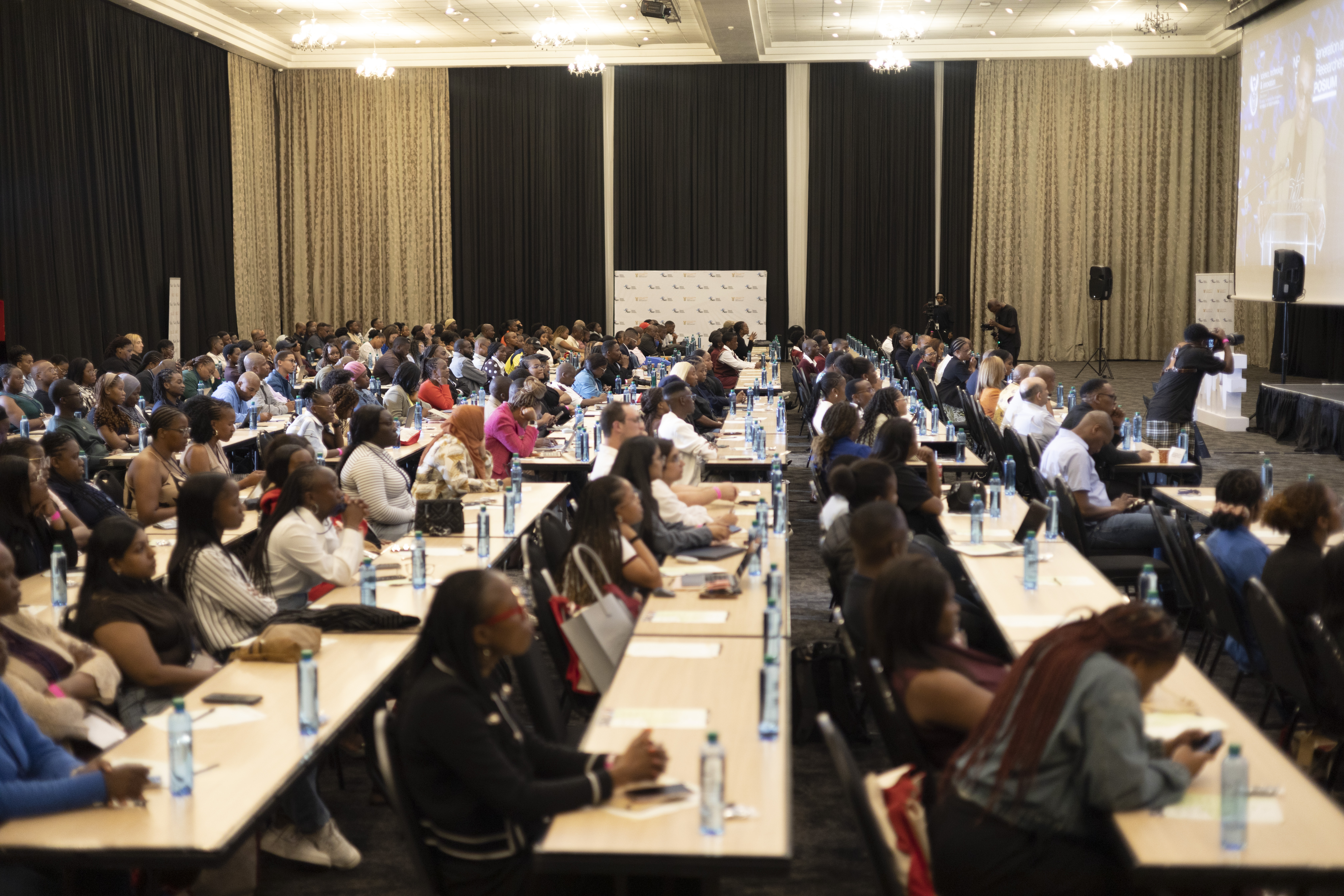
For the NIHSS, participation in platforms such as the NRF Next Generation and Emerging Researchers Symposium is significant.
The Humanities and Social Sciences have an important role to play in helping the national research system interrogate questions of knowledge, society, history, inequality, identity, ethics, power and transformation. Engagement between institutions such as the NIHSS and NRF therefore creates important opportunities to connect different parts of the research ecosystem and build a more inclusive and socially responsive knowledge environment.
The symposium itself underscored that addressing challenges within the national system of innovation requires collective effort and stronger collaboration between institutions and strategic partners, both nationally and internationally.
Prof Sithole’s participation reflects the value of bringing Humanities and Social Sciences perspectives into multidisciplinary spaces where the future of South African research is being shaped.
It also demonstrates the importance of institutions working together to support emerging researchers, strengthen intellectual agency and ensure that the production of knowledge remains connected to the societies and communities it is ultimately intended to serve.
Because building a transformed research system is not simply about increasing the volume of knowledge produced, it is also about asking who produces that knowledge, whose realities it reflects, who benefits from it, and how that knowledge contributes towards a better society.